



Kathmandu: Rastriya Swatantra Party (RSP) Chair Rabi Lamichhane has pledged his party’s full support to the government in the rescue, relief and rehabilitation of people affected by the devastating floods in the Bhotekoshi River.
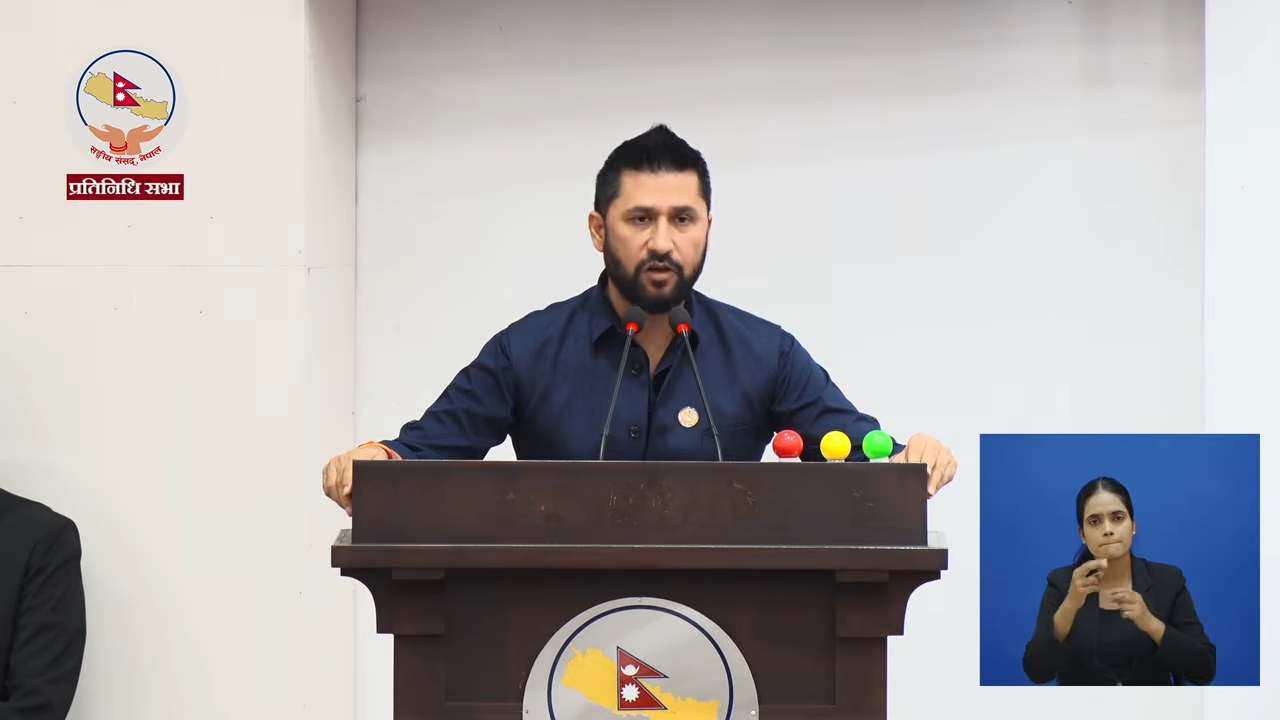
Speaking at the House of Representatives meeting on Wednesday, Lamichhane expressed grief over the loss of lives and property caused by the floods and called on all political parties to rise above the government-opposition divide and work together during the disaster.

Lamichhane said he had been in continuous contact with the Prime Minister, Home Minister, Health Minister and other concerned government officials since the morning to receive updates on rescue and relief efforts. He said saving lives must be the government’s top priority and that all available resources should be directed toward the effort.
He urged residents living along rivers and in flood-affected areas of Rasuwa and Dhading to remain alert and stay in contact with government authorities. He also called for increased caution in riverbank areas of Chitwan, Nawalparasi and other vulnerable districts.

Lamichhane urged the government to mobilize adequate security personnel and all available resources in the affected areas. He also called on political parties to deploy trained personnel and volunteers experienced in disaster management in coordination with government agencies and local administrations.
“We should not step into rescue and relief efforts carrying the flag of any political party; we should carry the national flag and work together,” he said.

Recalling the national unity demonstrated during the 2015 earthquake, Lamichhane said political parties should once again rise above political differences and demonstrate national solidarity.
He said the RSP, as the largest political party in Parliament, would take greater responsibility in coordinating and supporting disaster-response efforts.
According to Lamichhane, the National Disaster Risk Reduction and Management Authority has been mobilizing funds for rescue and relief through district disaster management committees. He said various government ministries and ministers were also actively involved in the response.
He emphasized that search and rescue should remain the first priority, followed by relief and rehabilitation. Recalling the support provided by Nepalis living abroad during previous disasters, he expressed confidence that Nepalis overseas would also extend assistance this time.
Lamichhane said rehabilitation after the disaster would be challenging but possible if all state mechanisms were effectively mobilized to support affected citizens.
He also urged the public and media not to circulate unverified reports or misleading photos and videos generated using artificial intelligence (AI). Such content, he said, could create additional fear and confusion among affected communities.
He said hospitals and health workers had been placed on standby and that helicopters operated by the Nepal Army and private-sector operators were also ready for emergency deployment.
Lamichhane cautioned that unnecessary crowds of political leaders, elected representatives and others in affected areas could place additional pressure on security personnel involved in rescue operations. He said he would avoid going to the field unless necessary and would instead focus on facilitating an effective government response.
He called for a coordinated, one-door system for relief distribution in cooperation with local administrations. Relief, he said, should not be limited to areas that are easily accessible but should also reach remote communities and people with limited access to state services.
He emphasized that women, pregnant women, children, senior citizens, persons with disabilities and other marginalized communities should receive priority during rescue and relief operations.
Lamichhane also urged political parties and organizations deploying volunteers for rescue operations not to take unnecessary risks without adequate training and equipment. Coordinating with trained rescue personnel, he said, would help prevent further loss of life.
Expressing concern that foreign tourists could also have been affected by the floods, Lamichhane said Nepal would ensure the rescue, treatment and safety of all those affected.
He appealed to the public not to gather unnecessarily at disaster sites to record videos, saying such activities could obstruct rescue operations and put both security personnel and civilians at additional risk.
Lamichhane said the RSP would hold an emergency meeting to determine its contribution to the relief fund and would mobilize its lawmakers collectively in disaster-management efforts.
He also urged opposition parties, civil society and other stakeholders not to rush to assess the government’s performance during the crisis. Saving lives, he said, should be the immediate priority, while the government’s response should be evaluated only after rescue, relief and rehabilitation efforts are completed.
Looking ahead, Lamichhane stressed the need to make early-warning systems and technology a key component of development to minimize losses from future disasters. Development, he said, should not be measured solely by large physical infrastructure projects; priority must also be given to technologies and mechanisms capable of providing timely warnings before disasters occur.
Lamichhane urged the government to use its full capacity for search and rescue, relief and rehabilitation, and called on all political parties to stand together and demonstrate national solidarity during the disaster.